The audio for this story is currently not available.
Lefelo le le nnye kwa dibese di emang gone mo motseng wa me go tletse batho le dibese tse di tletseng batho. Fa fa fatshe gone go tletse dilo tse di tshwanetsweng go olelwa. Mooleledi o ne a itsise maina a mafelo a kwa dibese di teng. gone
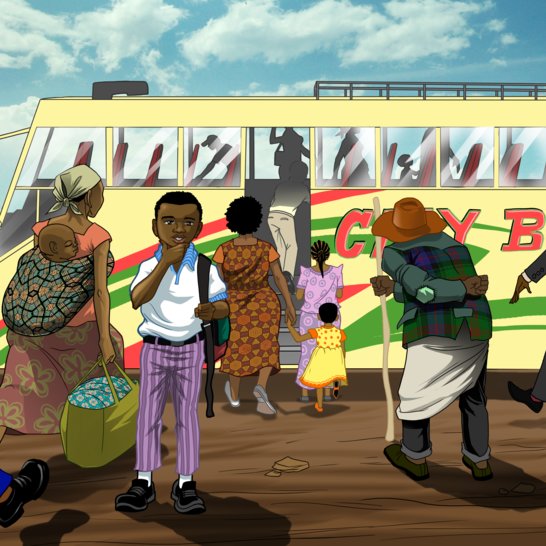
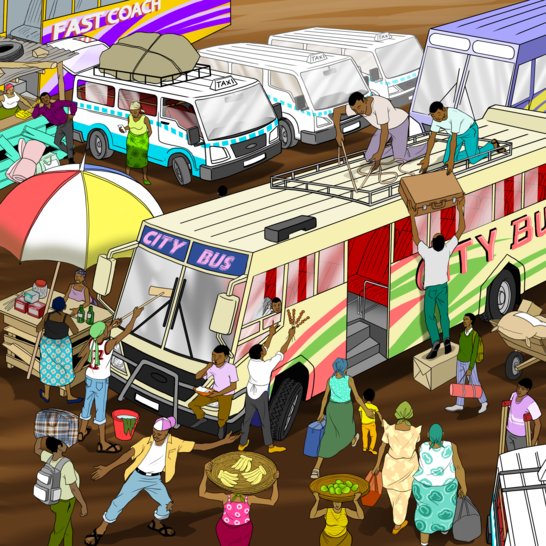
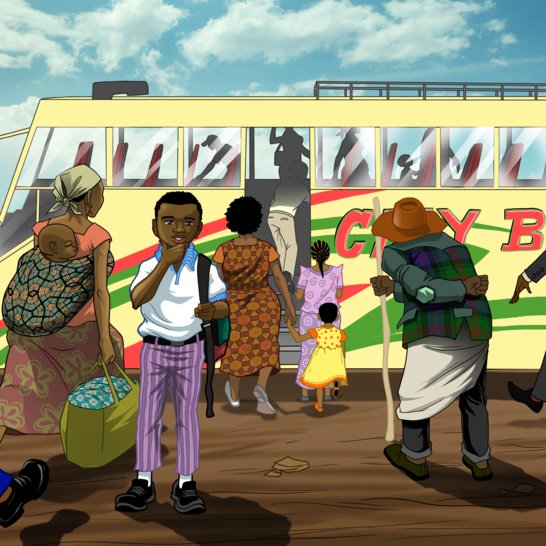
The small bus stop in my village was busy with people and overloaded buses. On the ground were even more things to load. Touts were shouting the names where their buses were going.
Le petit arrêt d’autobus dans mon village était occupé par des tas de gens et des autobus surchargés. Sur le sol il y avait encore plus de choses à charger. Les revendeurs de billets criaient les noms des endroits où leurs autobus allaient.
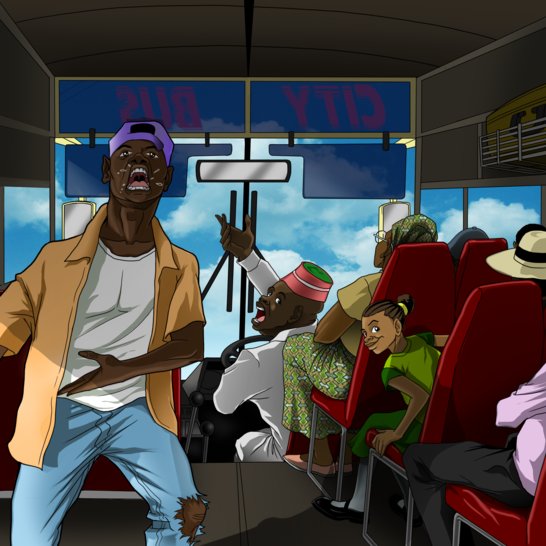
“Toropo!Toropo!” E ya bopririma!” ka utlwa moitsise a goa. E ne e le bese e ke tshwanetseng go e palama.
“City! City! Going west!” I heard a tout shouting. That was the bus I needed to catch.
J’entendis un revendeur de billets crier: « Ville ! Ville ! Direction ouest ! ». C’était l’autobus que je devais prendre.
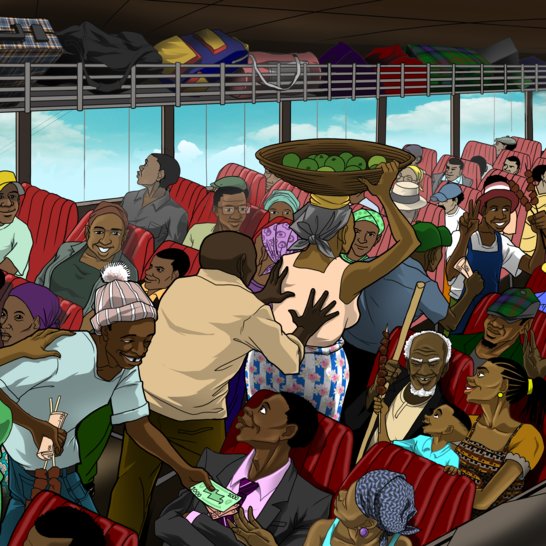
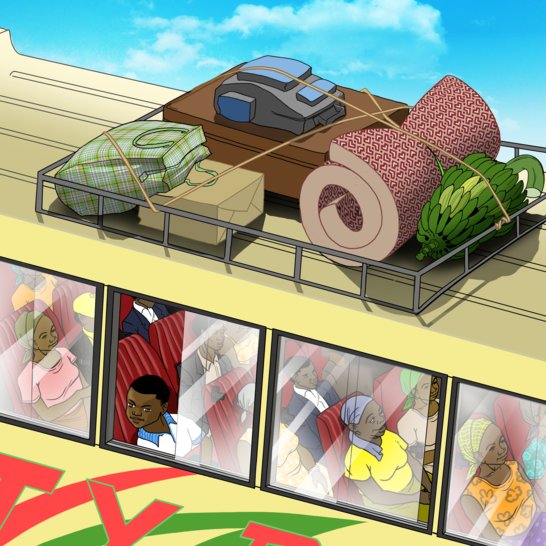
Bese ya toropo e ne e setse e tletse, mme batho ba sa ntse ba leka go tsena mo teng. Bangwe ba beile dithoto tsa bone ka fa tlase ga bese.Bangwe ba di beile mo di rakeng moteng ga bese.
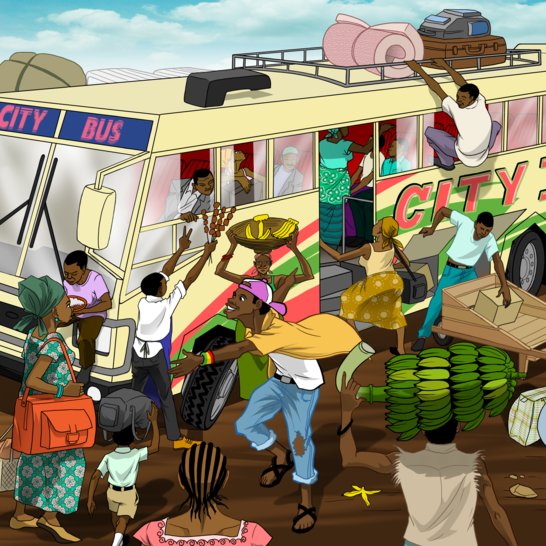
The city bus was almost full, but more people were still pushing to get on. Some packed their luggage under the bus. Others put theirs on the racks inside.
L’autobus de ville était presque plein, mais plus de personnes poussaient encore pour embarquer. Quelques-unes chargèrent leurs valises sous l’autobus. D’autres mirent les leurs sur les étagères à l’intérieur.
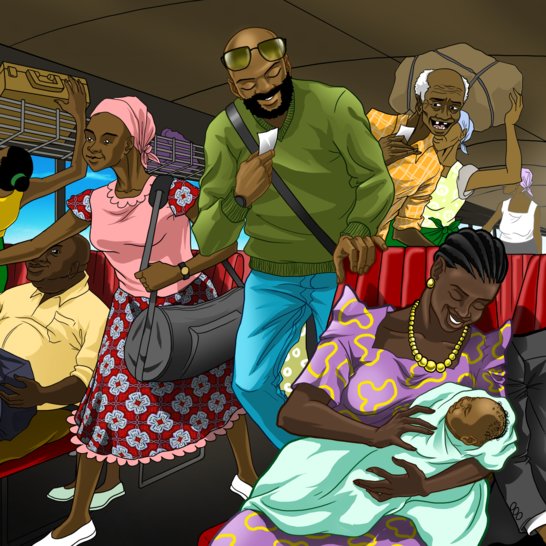
Baete ba basha ba punya di karata tsa bone ba ntse ba senkang fa ba ka dulang gone mo beseng e e tleseng. Basadi le bana ba banye ba ipaakanyetsa loeto lo le leele go dula sentle.
Ka itshokela go bapa le letlhabaphefo.Motho yo o dutseng go bapa le letlhaphefo o ne a tshegeditse kgstese ya polasetiki e e mmala o motala.A rwele ditlhako tsa disandale tse di tshofetseng, jase e gagogileng,mme a mo lebile ka thwaafalo.
New passengers clutched their tickets as they looked for somewhere to sit in the crowded bus. Women with young children made them comfortable for the long journey.
Des nouveaux passagers agrippaient leurs billets tandis qu’ils cherchaient un endroit pour s’asseoir dans l’autobus. Des femmes avec de jeunes enfants les installaient confortablement pour le long voyage.
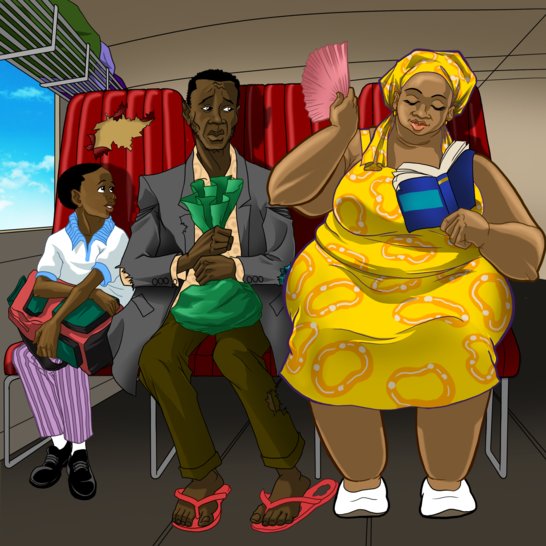
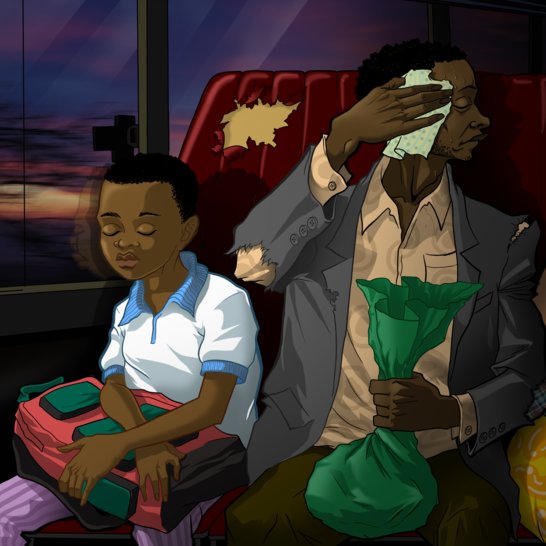
K itshukela fa mothong yo o ne a bapile le letlhabaphefo. Motho yo o ne a dutse go bapa le nna le letlhabaphefo o ne a tshegeditse kgetse ya polasitiki thata. A rwele mpapheetshane ba ba tshofetseng, jase e e gagogileng, a bonala letshogo.
I squeezed in next to a window. The person sitting next to me was holding tightly to a green plastic bag. He wore old sandals, a worn out coat, and he looked nervous.
Je me suis serré à côté d’une fenêtre. La personne à côté de moi tenait un sac vert en plastique fermement. Il portait de vieilles sandales, un manteau usé, et il semblait nerveux.
Ke ne ka leba kwa ntle ga bese mme ke ne ka gopola ke tswa mo motseng wa me, lefelo le ke goletseng mo go lone. Ke ne ke ya kwa toropong e kgolo.
I looked outside the bus and realised that I was leaving my village, the place where I had grown up. I was going to the big city.
Je regardai à l’extérieur de l’autobus et je réalisai que je quittais mon village, l’endroit où j’avais grandi. Je me rendais à la grande ville.
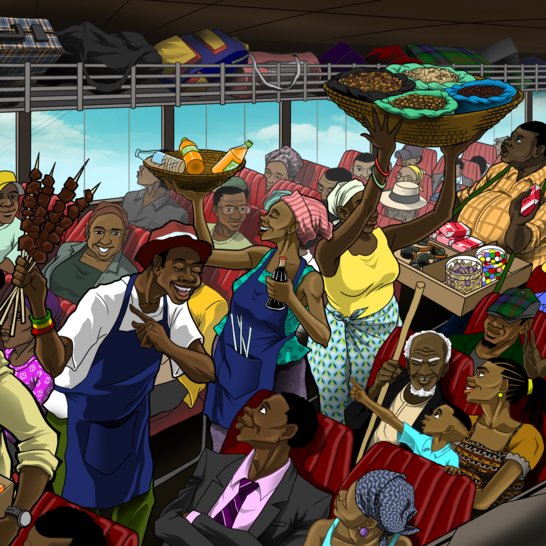
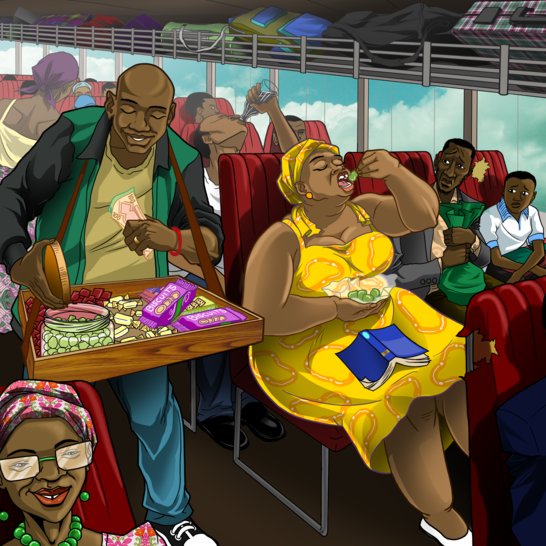
Go ne go oletswe baeti ba dutse. Barekise ba sa ntse ba tsena mo teng go ya go rekisa dilo tsa bone kwa balaming. Mongwe lw mongwe o ne a goa maina go itsise se a se rekisang. Mafoko ao a ne utlwala a sa tlwaelega.
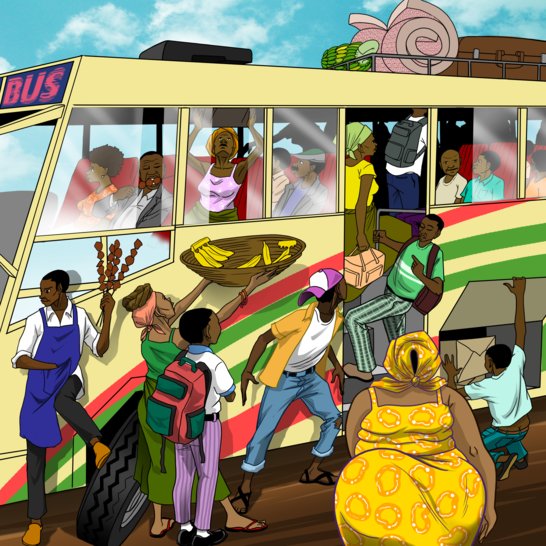
The loading was completed and all passengers were seated. Hawkers still pushed their way into the bus to sell their goods to the passengers. Everyone was shouting the names of what was available for sale. The words sounded funny to me.
Le chargement était complet et tous les passagers étaient assis. Des colporteurs se frayaient encore un passage dans l’autobus pour vendre leurs marchandises aux passagers. Chacun criait les noms des articles disponibles. Les mots me semblaient drôles.
Bapagamo ba le mmalwa ba ne ba reka dinnotsididid, bangwe ba reka mo go nnye ba a ja. Ba ba se nang madi, jaaka nna, be ne ba lebeletse fela.
A few passengers bought drinks, others bought small snacks and began to chew. Those who did not have any money, like me, just watched.
Quelques passagers achetèrent des breuvages, d’autres achetèrent des petites collations et commencèrent à manger. Ceux qui n’avaient pas d’argent, comme moi, observaient seulement.
Ditiro tse di ne tsa kgorelediwa ke go hutara ga bese, sekao sa gore re ipaakanyeditse go kgoetsa. Moreki a goelela barekisi go tswa mo beseng.
These activities were interrupted by the hooting of the bus, a sign that we were ready to leave. The tout yelled at the hawkers to get out.
Ces activités furent interrompues par le klaxonnement de l’autobus, un signe que nous étions prêts à partir. Le revendeur de billets cria aux colporteurs de sortir.
Barekisi ba kgorometsana go tswa mo beseng.Bangwe ba busetsa baeti madi mangwe.Ba bangwe ba sa ntse ba leka go rekisa dilo tsa bone mo motshontshong wa bofelo.
Hawkers pushed each other to make their way out of the bus. Some gave back change to the travellers. Others made last minute attempts to sell more items.
Les colporteurs se poussaient pour sortir de l’autobus. Quelques-uns ont redonné de la monnaie au voyageurs. D’autres ont fait des tentatives de dernière minute pour vendre d’autres articles.
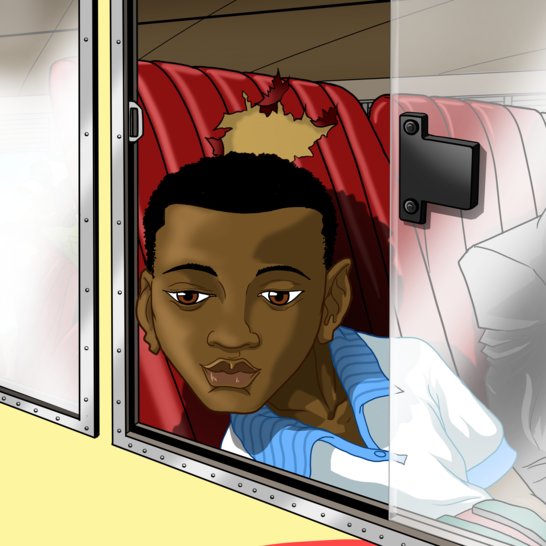
Fa bese e tswa fa boemelong jwa dibese, Ka leba kwa ntle ka letlhabaphefo. Ka hakgamala gore a ke ka boela gape mo motseng wa me gape.
As the bus left the bus stop, I stared out of the window. I wondered if I would ever go back to my village again.
Lorsque l’autobus quitta l’arrêt, j’ai regardé par la fenêtre fixement. Je me demandais si je retournerais à mon village un jour.
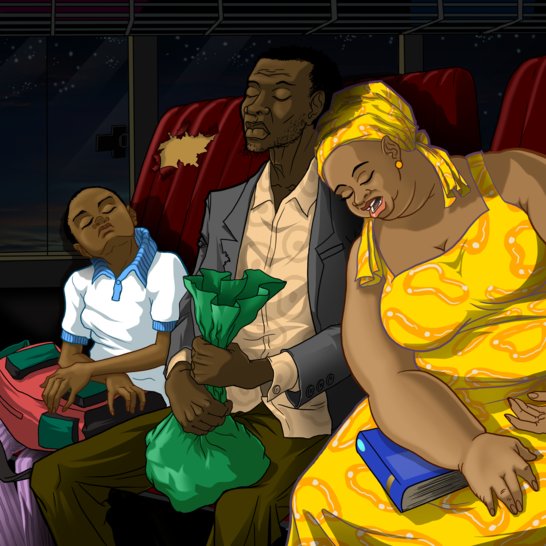
Fa loeto le tsweletse, mo teng ga bese ga na mogote. Ke ne ka tswala matlho a me ka tsholofelo ya gore ka tla robala,
As the journey progressed, the inside of the bus got very hot. I closed my eyes hoping to sleep.
Alors que le voyage avançait, l’intérieur de l’autobus est devenu très chaud. J’ai fermé les yeux en espérant dormir.
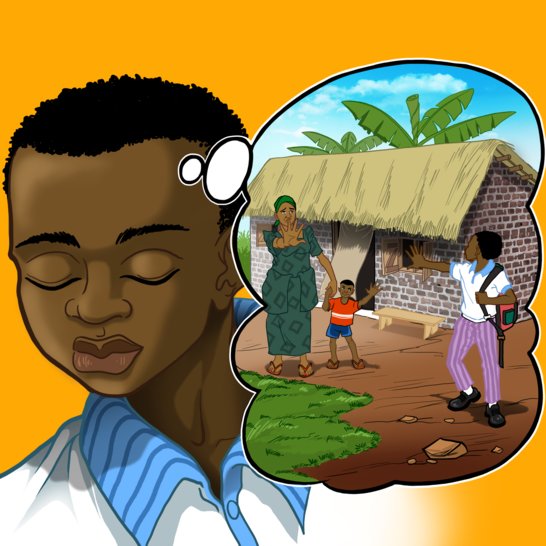
Mme mogopolo wa me wa mpusetsa kwa gae. A mma o tla sireletsega? A mmutla wa me o tla tsaya madi mangwe? A nkgonne o tla gakologelwa go nosa ditlhare tse dinnye?
But my mind drifted back home. Will my mother be safe? Will my rabbits fetch any money? Will my brother remember to water my tree seedlings?
Mais je repensais toujours à chez moi. Est-ce que ma mère serait en sécurité ? Est-ce que mes lapins rapporteraient de l’argent ? Est-ce que mon frère se souviendrait d’arroser mes semis d’arbres ?
Mo tseleng, ka ithuta leina la lefelo le malome o nang teng mo toropong e kgolo. Fa ke ntse ke e biletsa kwa tlase ka robala.
On the way, I memorised the name of the place where my uncle lived in the big city. I was still mumbling it when I fell asleep.
En chemin, j’ai mémorisé le nom de l’endroit où mon oncle vivait dans la grande ville. Je le marmonnais encore lorsque je me suis endormi.
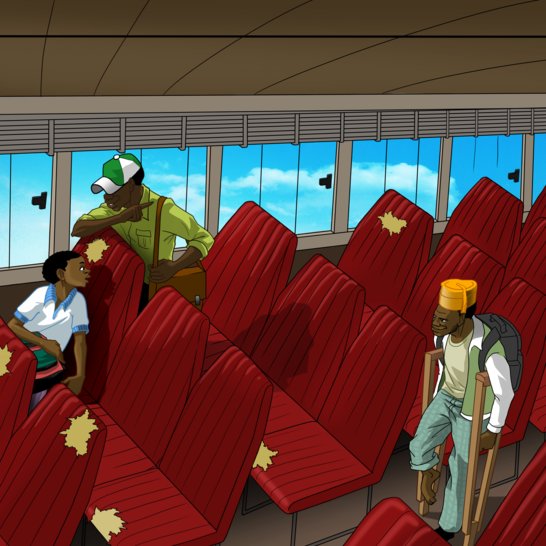
Morago ga diura tse robongwe, ke ne ka tsosiwa ke modumo o mogolo ke bitsa baeti ba ba boelang kwa motseng wa rona. Ka phamola kgetse ya me ka tswa mo beseng.
Nine hours later, I woke up with loud banging and calling for passengers going back to my village. I grabbed my small bag and jumped out of the bus.
Neuf heures plus tard, je me suis réveillé au bruit de quelqu’un qui appelait les passagers qui retournaient au village. J’ai ramassé mon petit sac et j’ai sauté de l’autobus.
Bese e e boang ya tlala ka bonako. Ka bonako ya leba botlhaba.Se se botlhokwa mo go na jaanong ,ke go simolola go senka ntlo ya ga malome.
The return bus was filling up quickly. Soon it would make its way back east. The most important thing for me now, was to start looking for my uncle’s house.
L’autobus de retour se remplissait rapidement. Bientôt il partirait vers l’est. La chose la plus importante pour moi maintenant était de commencer à chercher la maison de mon oncle.